Why Investors Don’t Understand Your Startup (And How to Fix It)
Deep Tech Brand StrategyIn the world of deep tech, the gap between innovation and investment often isn't about the technology itself—it's about the story. Investors don't fund technology; they fund belief in a future that technology makes possible.
“The founders who raise are rarely the ones with the best technology. They’re the ones who made the future feel inevitable.”
You've spent years solving a genuinely hard problem. You have the patents, the prototype, the early traction, and the technical receipts to prove it works. You walk into a pitch meeting and somewhere between slide four and slide nine, you watch the room go glassy-eyed.
It's not that investors are unsophisticated. It's that comprehension is not the same as conviction. Understanding how something works is a different cognitive event than believing it will change the world. And until you bridge that gap, you're not pitching, you're lecturing.
This piece is about how deep tech and hard tech founders can build the kind of strategic positioning that closes the comprehension gap, creates a new category that investors want to own, and gives customers a reason to adopt something they've never seen before.
The Real Problem: You're Explaining, Not Positioning
Most technical founders default to explanation mode. And it makes sense—you've spent years solving an enormously complex problem. You want people to understand it. But explanation satisfies curiosity. Positioning creates desire.
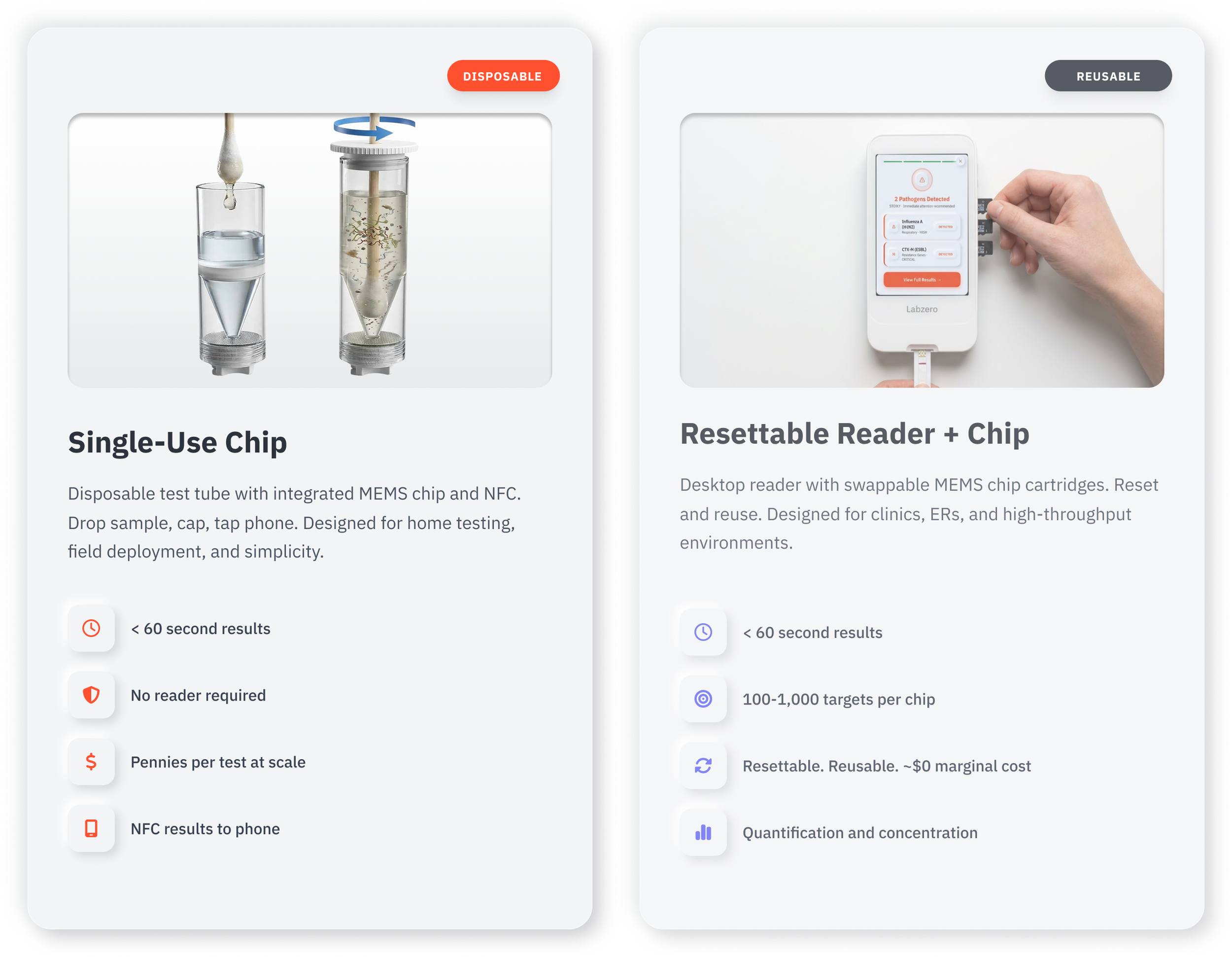
When Labzero was building its diagnostic platform, the instinct was to lead with the technical architecture: MEMS chip integration, NFC tap-to-read, sub-60-second pathogen detection across hundreds of targets simultaneously. All extraordinary. But to an investor or a first-time customer, that description sounds like a product spec sheet, not a future worth funding.
The smarter frame: Labzero isn't a diagnostic device. It's a new category entirely—somewhere between the clinical power of PCR lab testing and the consumer simplicity of an at-home pregnancy test, but capable of reading a full panel of anything you can imagine from a single sample drop. That's not an improvement on existing diagnostics. That's the redefinition of what a diagnostic is.
Case Study
Labzero: Defining a New Diagnostic Category
The positioning challenge wasn't technical—it was categorical. PCR is gold-standard but requires a lab, a technician, 45 minutes, and significant cost. An at-home lateral flow test (think: the COVID rapid test or a pregnancy test) is accessible but binary and limited in scope. Labzero's platform doesn't fit either bucket: it delivers near-PCR sensitivity with at-home simplicity across a full multi-pathogen panel. The breakthrough wasn't just in the chip design—it was in naming a new space that neither category could claim. Once you define the category, you own it.
What Category Creation Actually Means and Why It Matters for Investment
Category creation is one of the most powerful levers in startup strategy, but it's also one of the most misunderstood. It doesn't mean inventing a buzzword. It means identifying a white space in the market that only your product can fill, and naming that space before anyone else does.
When a category doesn't yet exist, investors can't benchmark you against a competitor. They can't say "they're like X but for Y." They have to evaluate you on your own terms—which means your positioning becomes the benchmark. That's an enormous strategic advantage, if you set it up correctly.
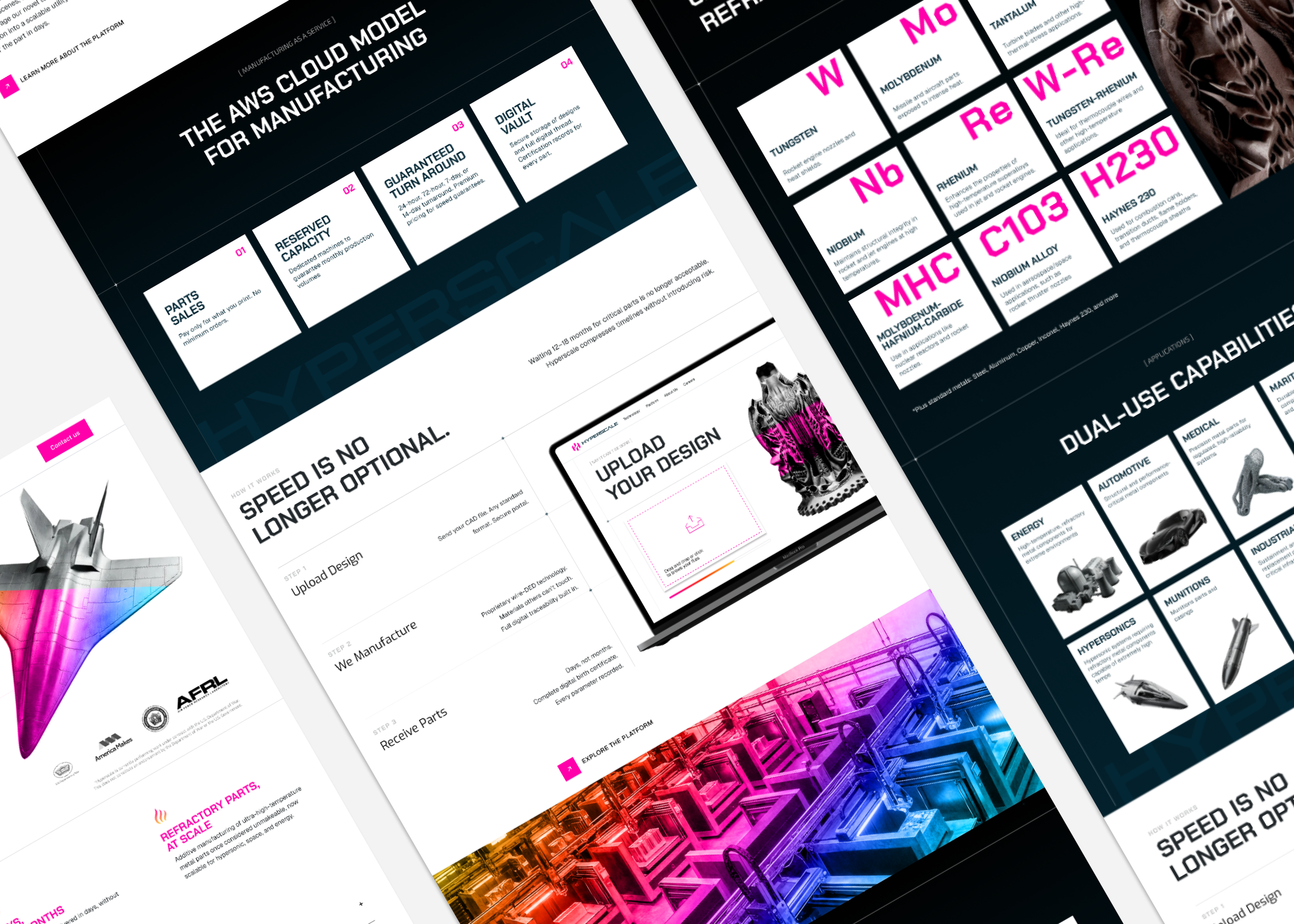
Consider Hyperscale, a distributed metal manufacturing platform producing critical parts on demand for hypersonics, defense, space, and energy applications. On the surface, it sounds adjacent to a dozen other additive manufacturing companies. But the comparison breaks down almost immediately—because what Hyperscale built isn't a better 3D printer. It's manufacturing infrastructure, rebuilt from the ground up as a utility.
Using proprietary wire-DED technology, Hyperscale produces refractory and ultra-high-temperature metal parts that other manufacturing methods simply can't make—at forging-level economics, without tooling, without minimum order quantities, and with parts delivered in days rather than the 12–18 months traditional supply chains require. The distributed network of digitally qualified production hubs routes work dynamically, like compute jobs across a cloud network. Upload a CAD file. Receive the part.
The positioning challenge isn't "are we better than legacy forging?" The challenge is that no category exists yet for what Hyperscale actually is. The move: claim the analogy and then surpass it. They are, in their own words, the AWS cloud model for manufacturing—and once you see it that way, you understand immediately both the scale of the opportunity and the defensibility of the infrastructure moat they're building.
Case Study
Hyperscale: The AWS of Manufacturing
Hyperscale's positioning challenge was escaping comparison to every additive manufacturing company that came before it—most of which failed, overpromised, or remained niche. The move: stop competing in the "3D printing" category and establish ownership of an entirely new one: manufacturing-as-a-service infrastructure for the hardest materials in the most demanding programs on earth. The analogy to AWS isn't a shortcut—it's a precise claim. Like AWS, Hyperscale converts a capital-intensive, expertise-heavy, infrastructure problem into a usage-based utility. The investor narrative shifts from "is additive manufacturing finally ready?" to "who will own the manufacturing infrastructure layer for the defense and hypersonics era?" Hyperscale is already building the answer.
The Comprehension Gap: How to Bridge It Without Dumbing It Down
One of the most common mistakes technical founders make is overcorrecting. Once they realize investors aren't following the technical pitch, they strip everything out and go broad and vague. That's not better—it's just a different kind of lost.
The goal isn't to dumb it down. The goal is to build a bridge. Start with the world as it exists, name what's broken about it, then introduce your technology as the only credible answer to that specific problem. This is what brand strategists call the problem-solution narrative arc, and it works precisely because it meets the investor where they already are—in a world they recognize—before taking them somewhere new.
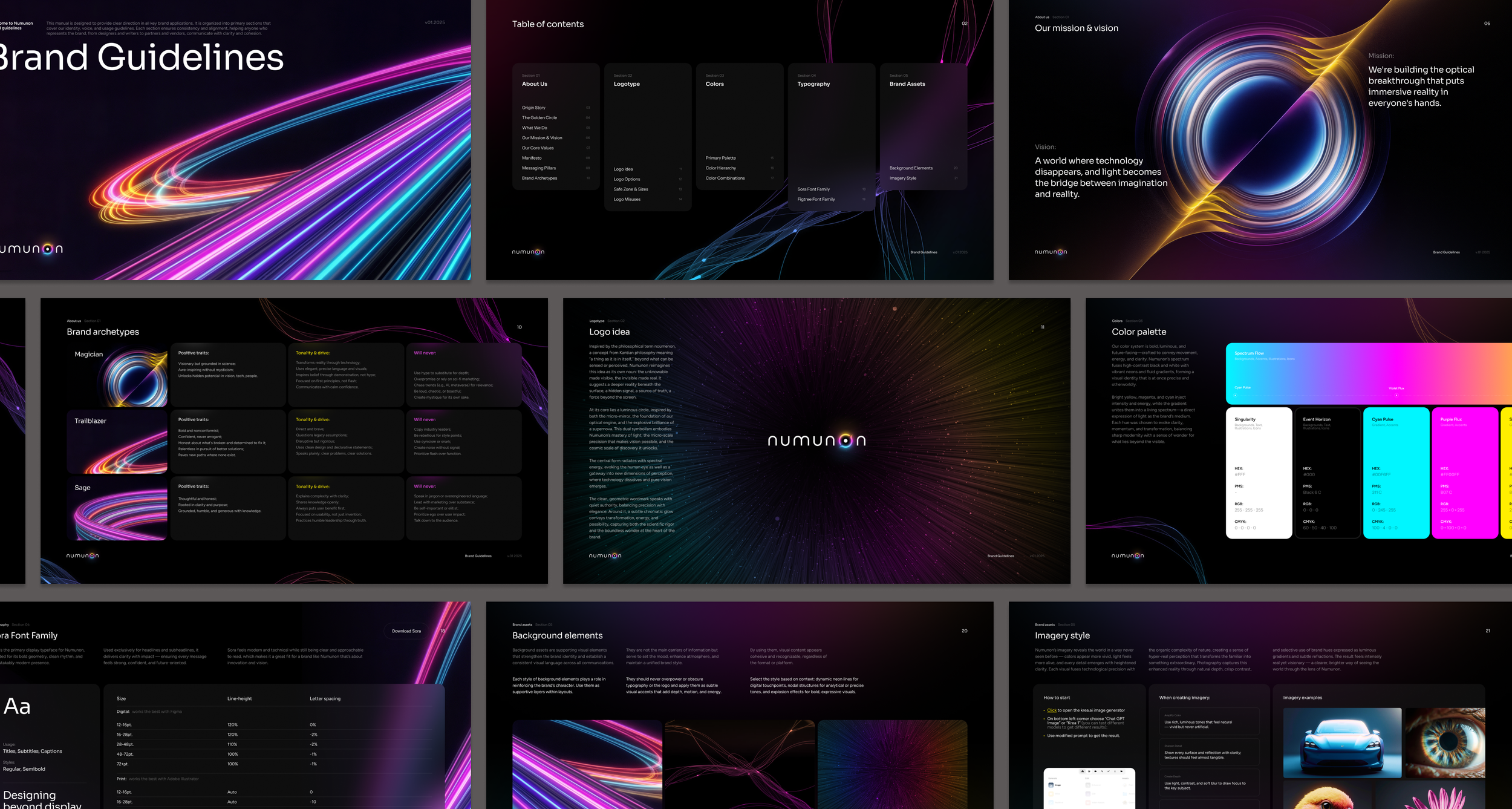
Take Numunon, a deep tech company building a new category in microdisplay technology for XR. Their Infinite Light Engine replaces every existing microdisplay architecture—microOLED, LCoS, DLP, microLED—with a fundamentally different approach: three RGB lasers and a MEMS mirror that projects light directly, rather than powering millions of individual pixels. The result is brighter, cooler, more efficient, and built on semiconductor-level yield processes that actually scale.
The explanation of how it works is genuinely compelling to an engineer. But to a generalist investor, "we replaced the microdisplay" sounds like an incremental spec improvement—not a category-defining bet. The bridge isn't the technology. It's the $150 billion that Apple, Meta, Microsoft, and Magic Leap spent proving that every XR program stalls at exactly the same point: the display stack. Numunon didn't improve the display stack. They made the existing one obsolete.
Case Study
Numunon: Making the Bottleneck the Story
The best deep tech narratives don't lead with what you built—they lead with what everyone else kept hitting. For Numunon, fifteen years of XR investment from the world's largest technology companies proved one thing conclusively: the microdisplay is the barrier. That's not a weakness in the pitch. That's the setup. Once you establish that every program stalled at the same point—brightness, heat, yield, offshore supply chain dependency—the Infinite Light Engine isn't a product announcement. It's an inevitability. The category Numunon is creating isn't "a new type of microdisplay." It's the display architecture that finally makes XR possible at scale, built on proven MEMS fabrication, with 90%+ yield, made in the USA.
Strategic Positioning That Works for Both Customers and Investors
Here's where most brand strategy frameworks fall short for deep tech: they're built for consumer brands or SaaS companies, where the purchase decision is simple and the buyer is one person. Deep tech founders often need to move multiple audiences simultaneously—clinical buyers and hospital administrators, procurement teams and end users, Series A investors and strategic acquirers—all with different vocabularies, different objections, and different definitions of success.
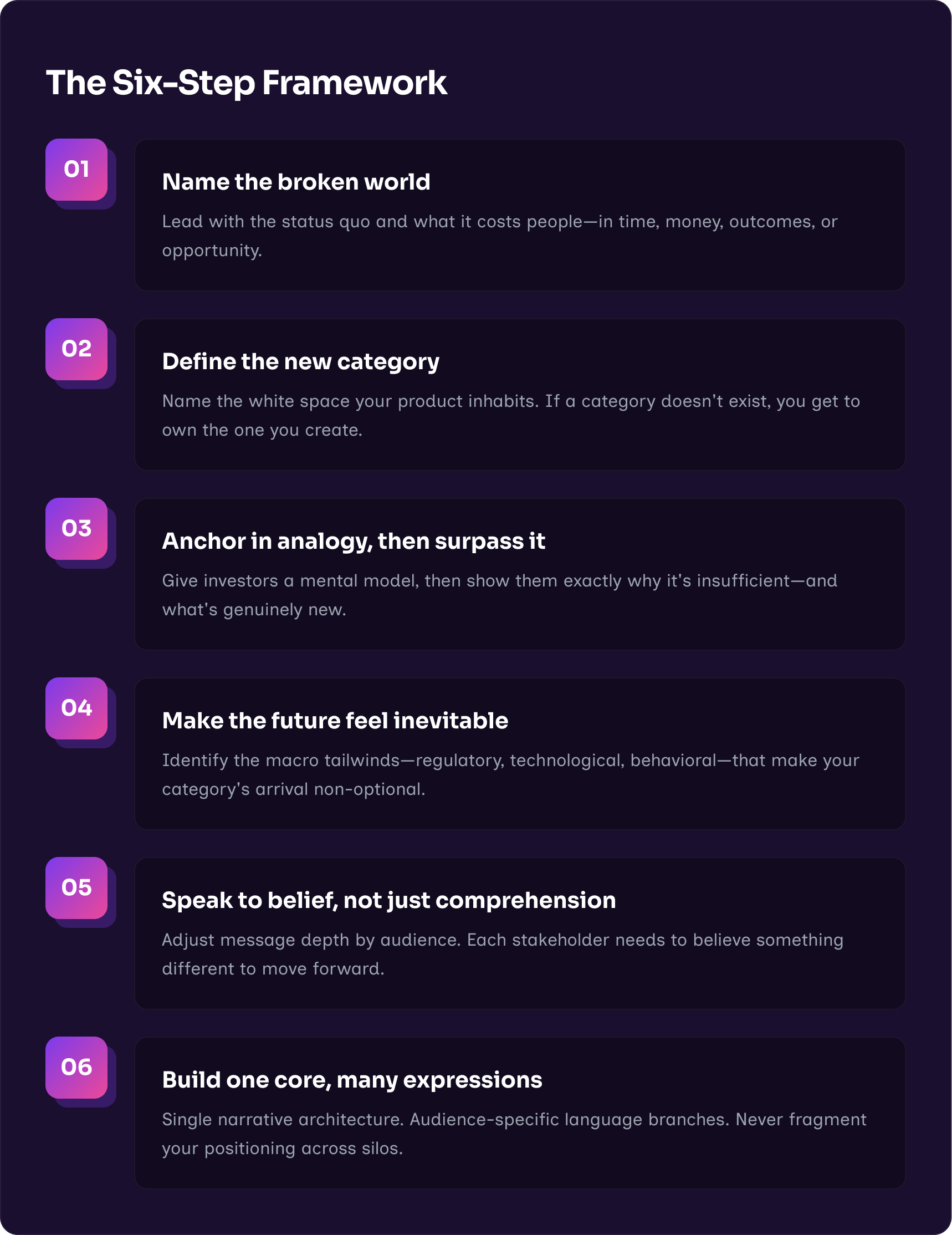
The answer isn't to build a different message for each audience. It's to build a positioning architecture with a single core narrative that branches into audience-specific expressions.
Build the Core Narrative First
Your core narrative should answer three questions: What's broken in the world that necessitates your existence? What do you do that no one else can? What does the world look like when you win? Everything else—pitch decks, website copy, sales collateral, investor memos—is a derivation of that core.
Map the Comprehension Stack
Not every audience needs to understand your technology at the same depth. Map out what each key stakeholder needs to believe (not understand) to take the next step. A Series A investor needs to believe in the market size and your defensibility. A clinical buyer needs to believe in efficacy and workflow fit. An enterprise procurement team needs to believe in TCO and integration risk. Build your messaging to create belief at the right level for each audience.

Name the Problem Before You Name the Solution
Category creation begins with problem definition. Before you introduce your technology, establish shared language around the problem it solves. The more precisely you can describe what's broken—in terms your audience already feels—the more inevitable your solution appears. This is as true in a fundraising pitch as it is on a product landing page.

Anchor in Analogy, Then Transcend It
Analogies are one of the most powerful positioning tools available. "The Stripe for X" or "the AWS of Y" format works because it gives investors an immediate mental model to attach to. But here's what most founders get wrong: they stop at the analogy. The best positioning uses analogy as a launch pad—it acknowledges the familiar comparison, then articulates exactly why that analogy falls short, and what's genuinely new about what you're building.
Labzero is not "the pregnancy test for diagnostics." It's what happens when you take the accessibility of a pregnancy test and give it the intelligence of a full clinical lab panel. It borrows the familiarity of the analogy, then surpasses it. That gap between the familiar comparison and your actual innovation—that's where conviction lives.
What to Think About While You're Building
The biggest mistake deep tech founders make with brand and positioning is treating it as a late-stage problem. "We'll figure out the messaging once we have the product." But positioning isn't decoration you apply to a finished product—it shapes how you build, what you prioritize, and who you hire.
If you're building a new category, you're not just building a product. You're building the evidence that the category is real. Every customer story, every partnership, every data point you generate is proof-of-category as much as it is proof-of-product. The startups that win category creation races are the ones who understand that sales and marketing is also market education, and that market education is a compounding asset.
Does your company name and category name reinforce each other, or fight each other?
Can a sophisticated non-expert describe what you do in one sentence after a five-minute conversation?
Is your go-to-market sequence aligned with the market education required before purchase is even possible?
Do you have a customer adoption story that doubles as an investor conviction story?
Have you named the macro tailwind that makes your category inevitable—not just important?
Is your pricing model legible in the context of your category, or does it require explanation?
Are you tracking comprehension metrics, not just awareness metrics, in your early marketing?
“The most effective deep tech marketing creates substance that travels: technically credible enough for experts, accessible enough to move generalists to action.”
The Bottom Line
If investors don't understand your startup, the technology isn't the problem. The frame is.
The founders who raise successfully at the pre-seed and Series A level for hard tech and deep tech companies aren't just building extraordinary things. They're also building extraordinary mental models—giving investors a new lens through which to see the world, and a clear position within it that only their company can fill.
Labzero isn't selling a chip. It's redefining what a diagnostic is. Hyperscale isn't selling metal parts. It's building the manufacturing infrastructure layer that hypersonics, defense, and space demand and can't find anywhere else. Numunon isn't selling a microdisplay. It's eliminating the bottleneck that $150 billion in XR investment couldn't solve.
Name the category. Own the frame. Make the future feel inevitable.
The investment will follow.
Invisible Engine is a brand strategy and design agency for technical founders in deep tech, hard tech, energy, and healthcare. We help founders build the positioning, narrative, and creative systems that close the comprehension gap—and win.